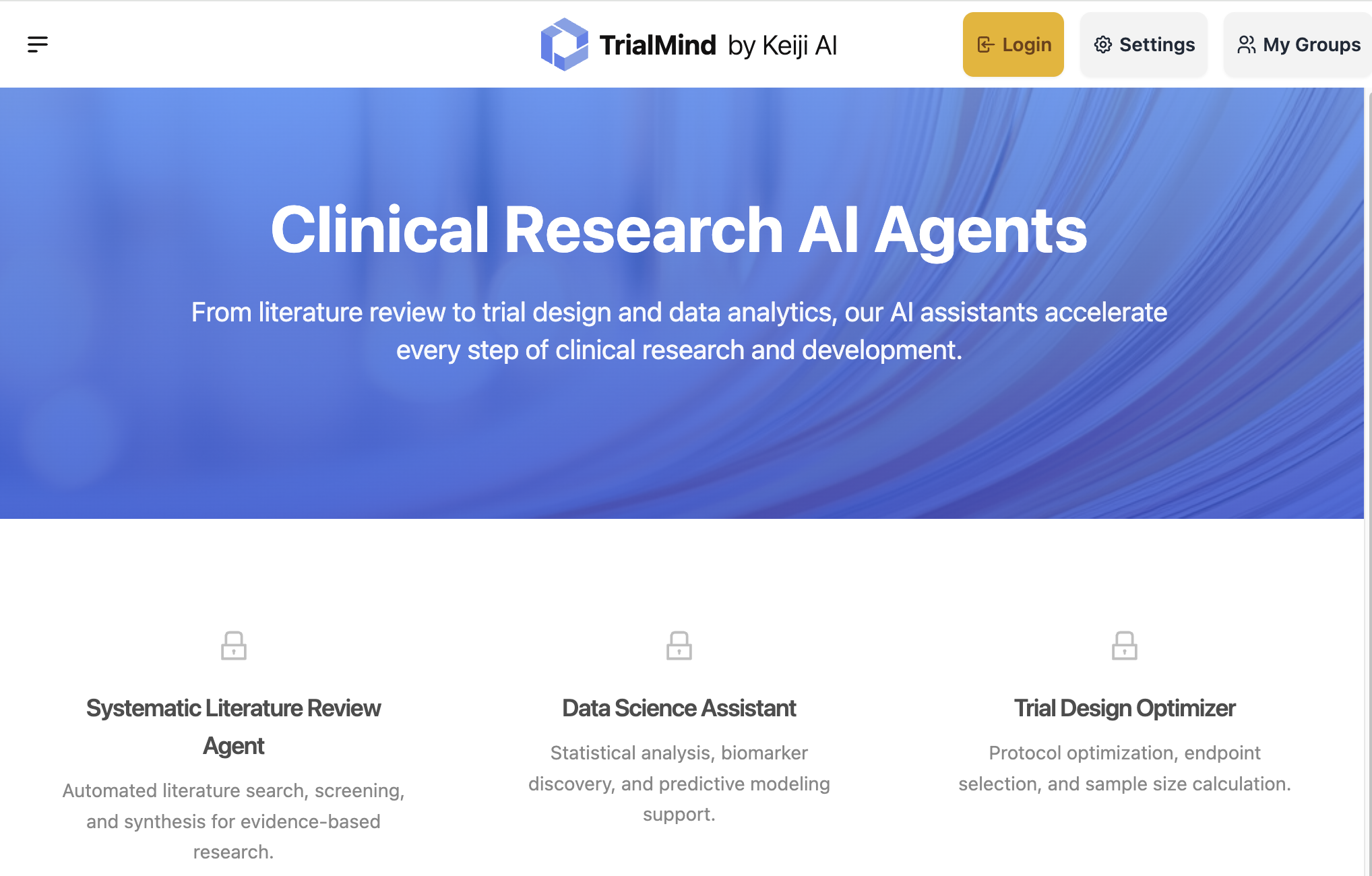
TrialMind: a production AI agent platform for clinical development
The flagship product at Keiji.AI, featuring expert-in-the-loop UX, agent harnesses, MCP/skill integration, agent memory maintenance, secure sandbox infrastructure, and agent evaluations.
Specialized agents span the trial lifecycle: systematic literature review, biomedical data science, real-world data analysis, trial design, site selection, patient-to-trial matching, safety monitoring, biostatistics programming, outcome prediction, and regulatory writing.
Adopted and deployed on-prem by 10+ biotech partners (e.g., AbbVie, Regeneron, AstraZeneca, Guardant Health).
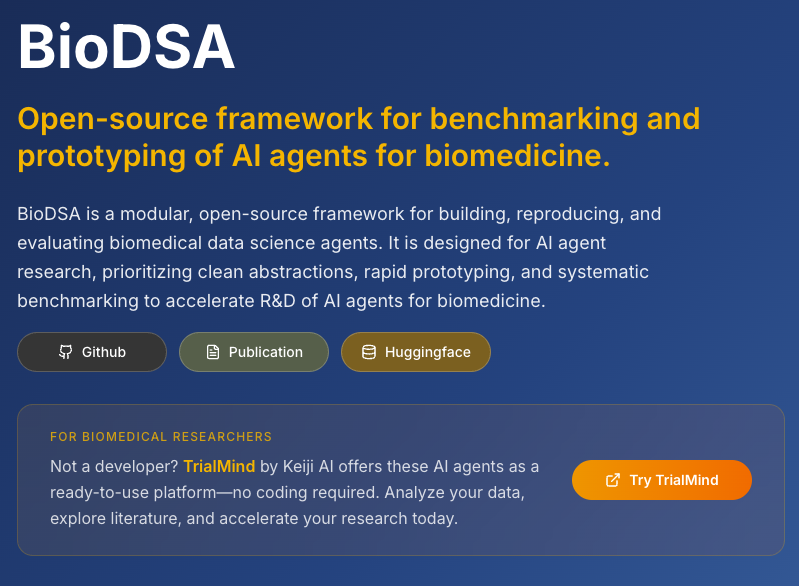
BioDSA: an open-source agent platform for biomedical research
A framework for rapidly building and deploying AI agents for biomedical tasks such as literature research, patient-trial matching, data analysis, and drug discovery.
Ships with 17+ biomedical knowledge-base integrations (PubMed, ChEMBL, UniProt, ClinicalTrials.gov, ...), Docker-sandboxed code execution, multi-provider LLM orchestration, and skill libraries for coding assistants (Cursor, Claude Code, Gemini).
TrialPanorama: a clinical trial database and benchmark
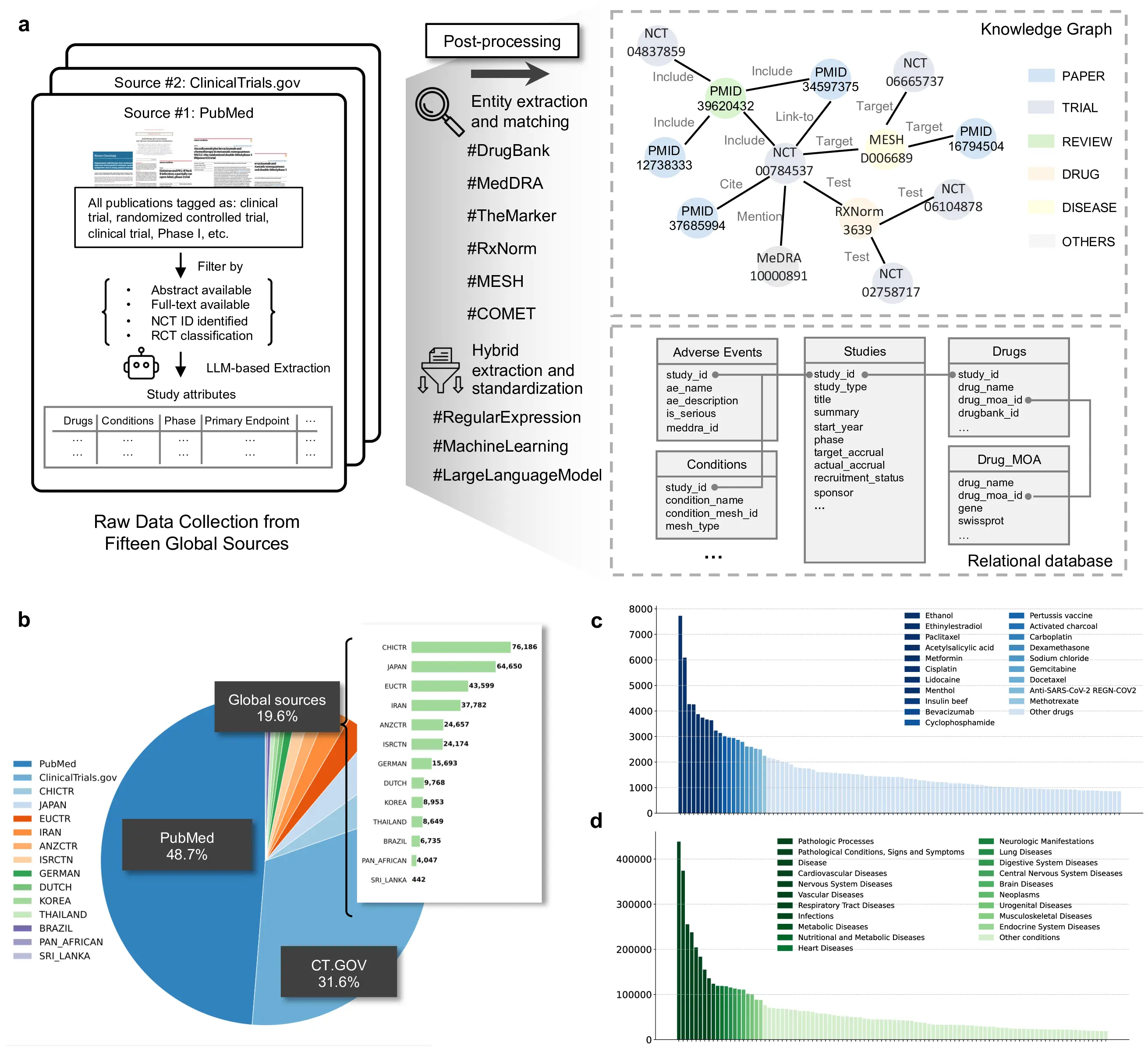
A large-scale, structured clinical trial database aggregating 1.65M+ records from 15 global sources, linked to biomedical ontologies and associated literature.
A benchmark across eight systematic-review and trial-design tasks for developing and evaluating large language models in clinical research.
LEADS: a specialized LLM for medical literature mining
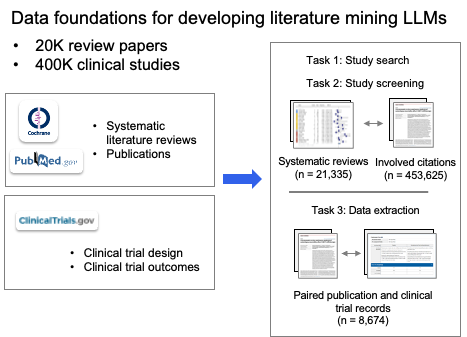
A 7B Mistral-based foundation model for systematic reviews and meta-analyses, supporting study search (PICO-based strategies), study screening against inclusion/exclusion criteria, and structured data extraction.
Trained on LEADSInstruct (633K+ instructions from systematic reviews, trials, and registries); outperforms generic LLMs and, in expert workflows, improves study selection and extraction while cutting task time ~23-27%.
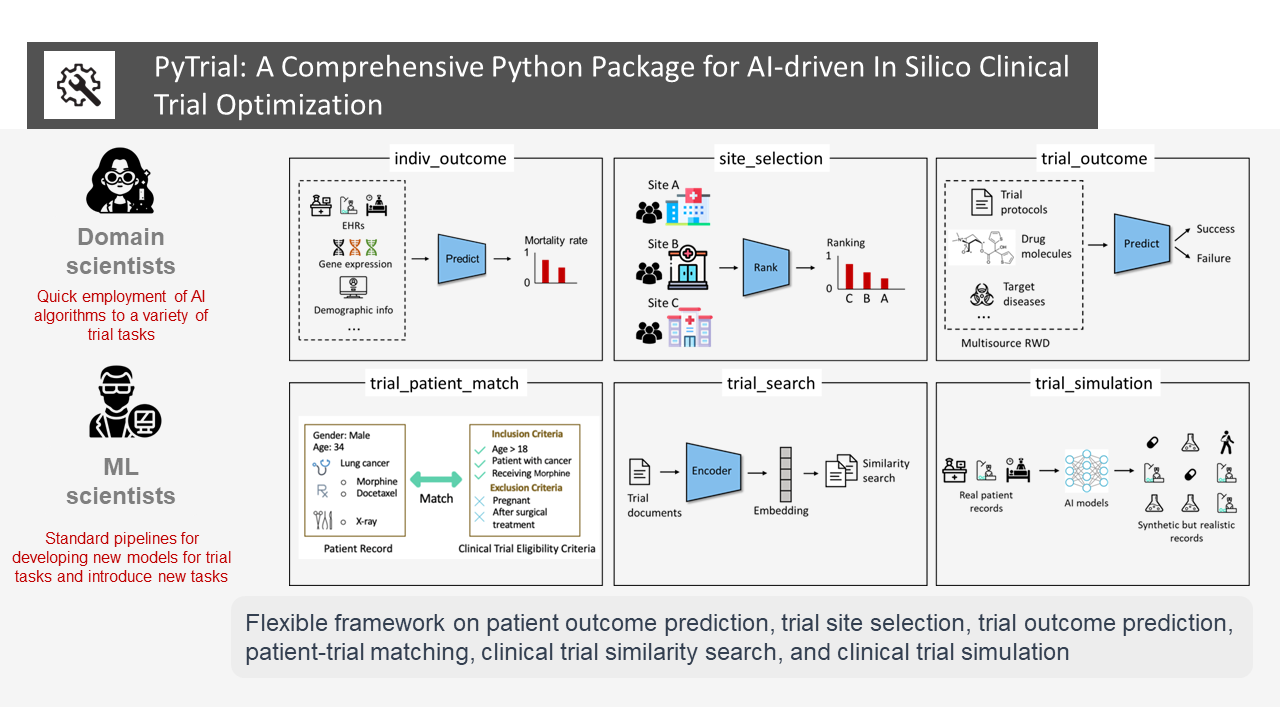
PyTrial: A Python Package for AI for Drug Development
Off-the-shelf pipelines with unified APIs for AI in clinical trials and drug development, implementing cutting-edge algorithms from top research papers.
Covers six task families: patient outcome prediction, trial site selection, trial outcome prediction, patient-trial matching, trial similarity search, and synthetic trial data generation.
Simple load–define–fit/predict workflow with consistent interfaces, documentation, and demo datasets.
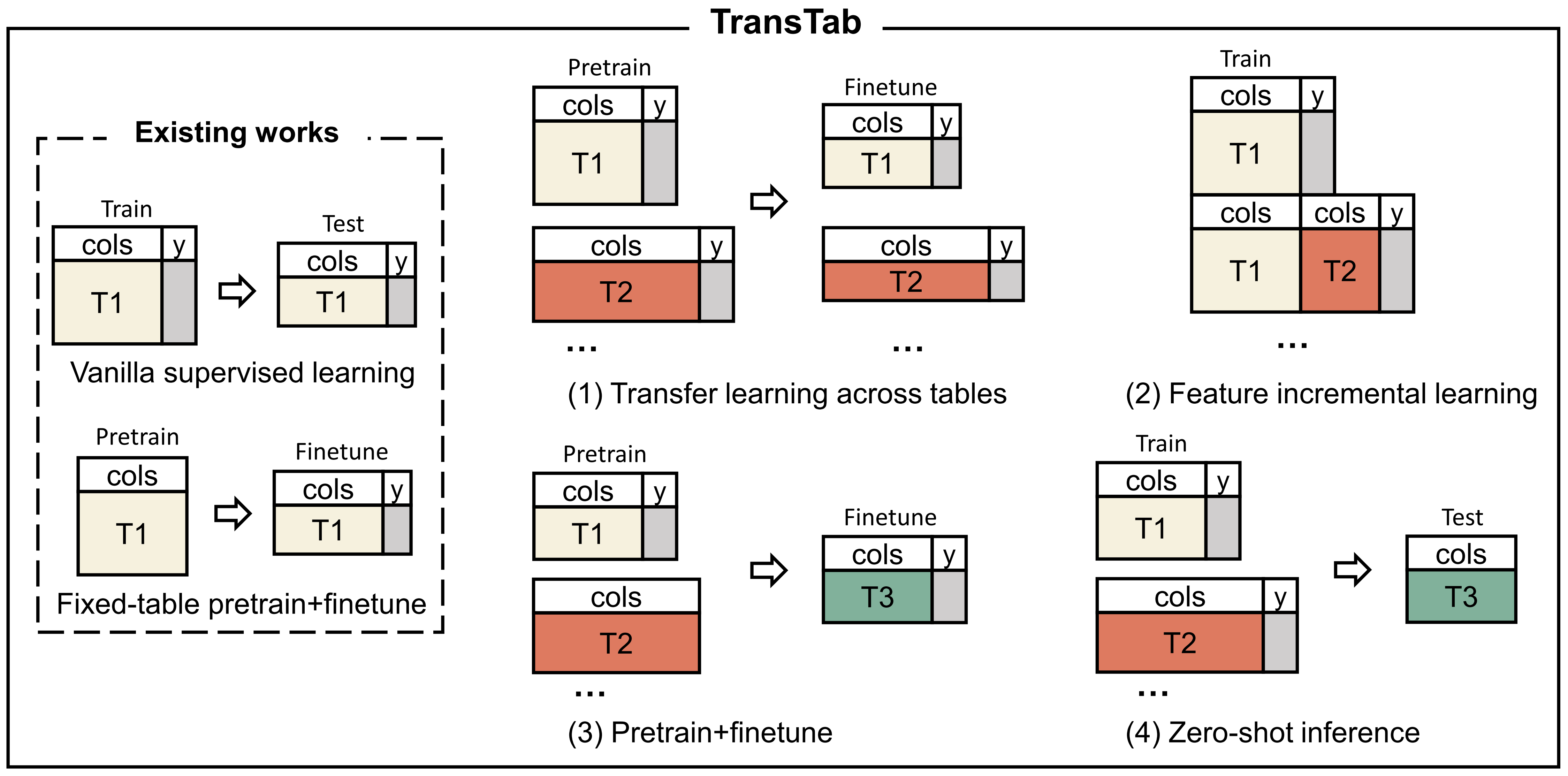
A flexible framework for tabular prediction (classification and regression) that learns across tables with different columns, enabling transfer learning between distinct datasets.
Supports contrastive pretraining over multiple tables and zero-shot prediction, with a simple few-lines-of-code API for categorical, numerical, and binary features.
Contrastive learning of a medical vision-language model from unpaired medical images and clinical reports, learning shared image-text representations without paired data.
Enables prompt-based medical image classification, image-text retrieval, and zero-shot diagnosis, with built-in CheXpert chest X-ray support.
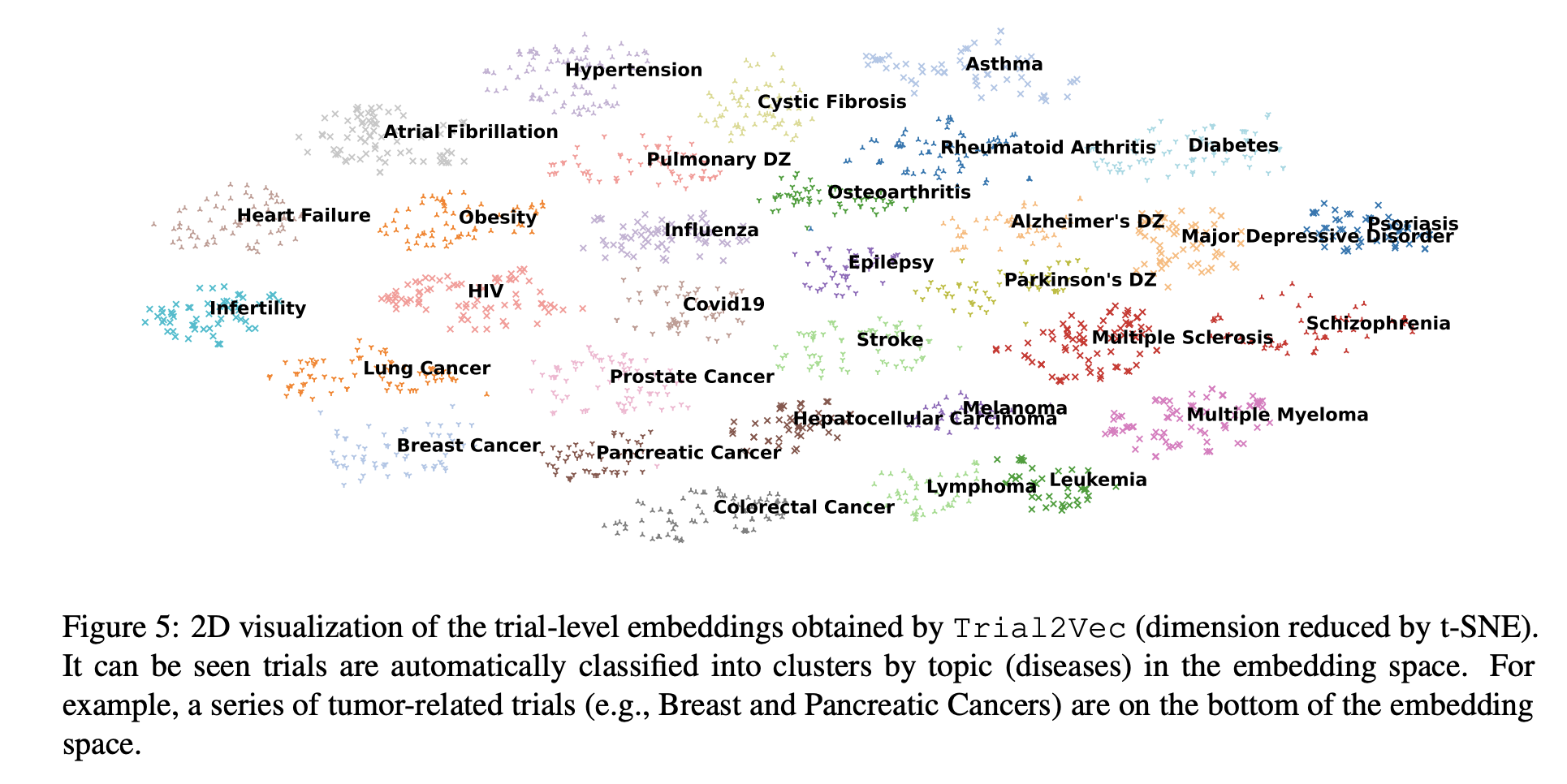
Trial2Vec: Clinical Trial Similarity Search
Zero-shot clinical trial document similarity search using self-supervision, encoding trials into semantically meaningful embeddings at the document and token levels.
Provides off-the-shelf pretrained embeddings accessible by trial ID, with fine-tuning on new trial data for downstream tasks.
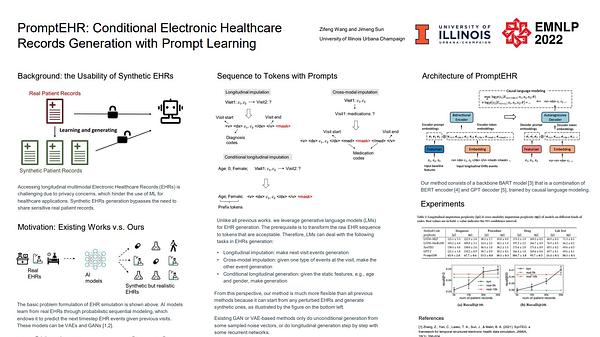
PromptEHR: Synthetic EHR Generation
Conditional generation of synthetic electronic health records via prompt learning, with a pretrained model (trained on MIMIC-III) ready to use out of the box.
Controlled synthesis of patient sequences with customizable parameters, useful for privacy-preserving healthcare research.